How to Fix Nicks in Stained Wood Trim and Furniture
I’ve lost count of how many times I’ve walked through a customer’s home and noticed those little battle scars on their trim or furniture. You know the ones, tiny nicks, scratches, or dings that jump out at you every time the light hits them. The good news is, you don’t have to live with them, and you don’t have to strip and refinish the whole piece either. A little stain and a few minutes of your time can make them practically disappear.
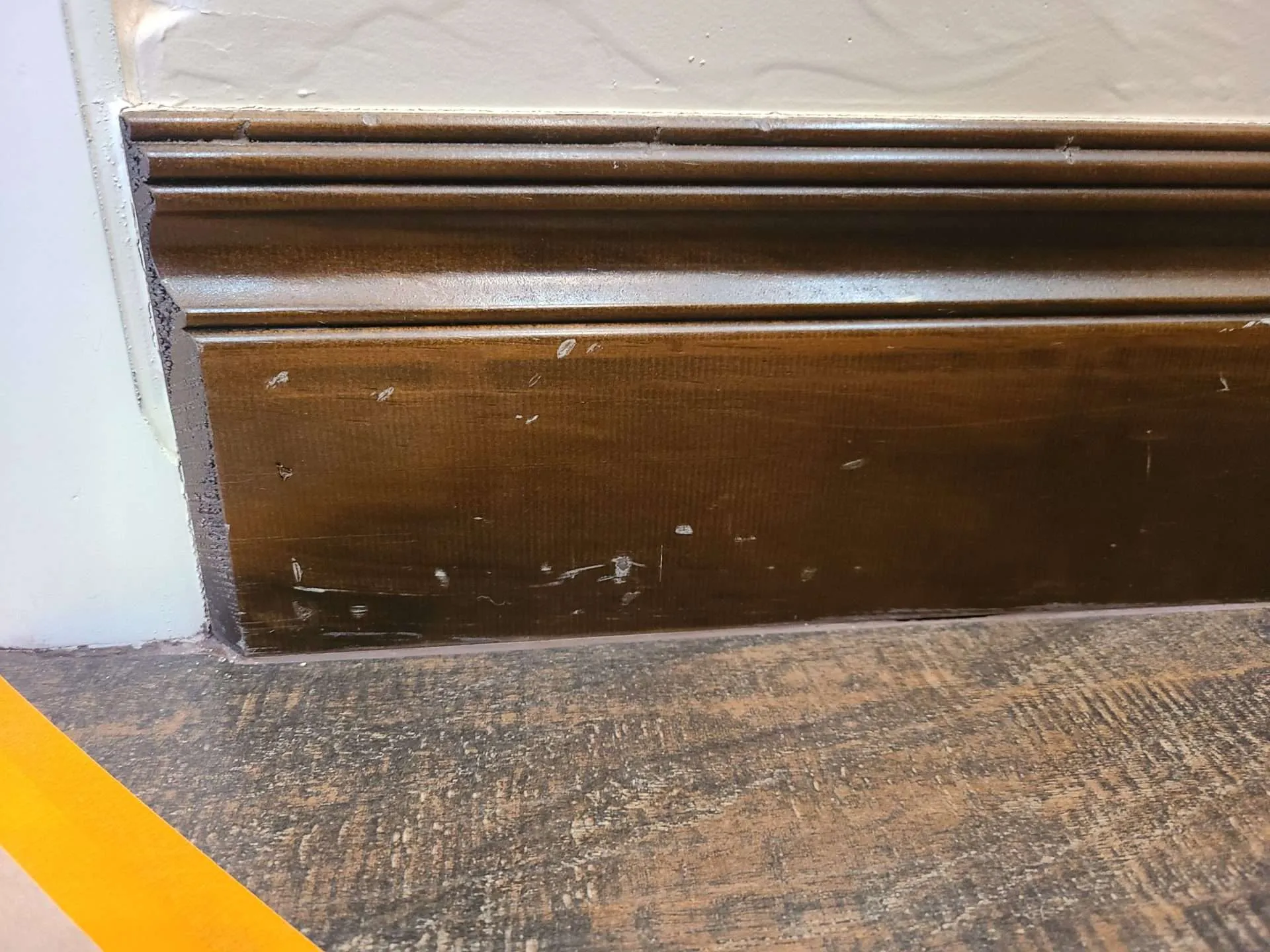
Here’s exactly how I fix nicks in stained wood, step by step, using nothing more than the stain you already have and a clean rag. While this doesn't make the wood look perfect, it will minimize the appearance of your nicks and make the wood look "new". (Just don't look too closely)
What You’ll Need
-
Stain that matches your woodwork
-
A stir stick
-
Rags or shop towels
-
Painter’s tape (if you’re close to walls or flooring)
Step 1: Stir the Stain
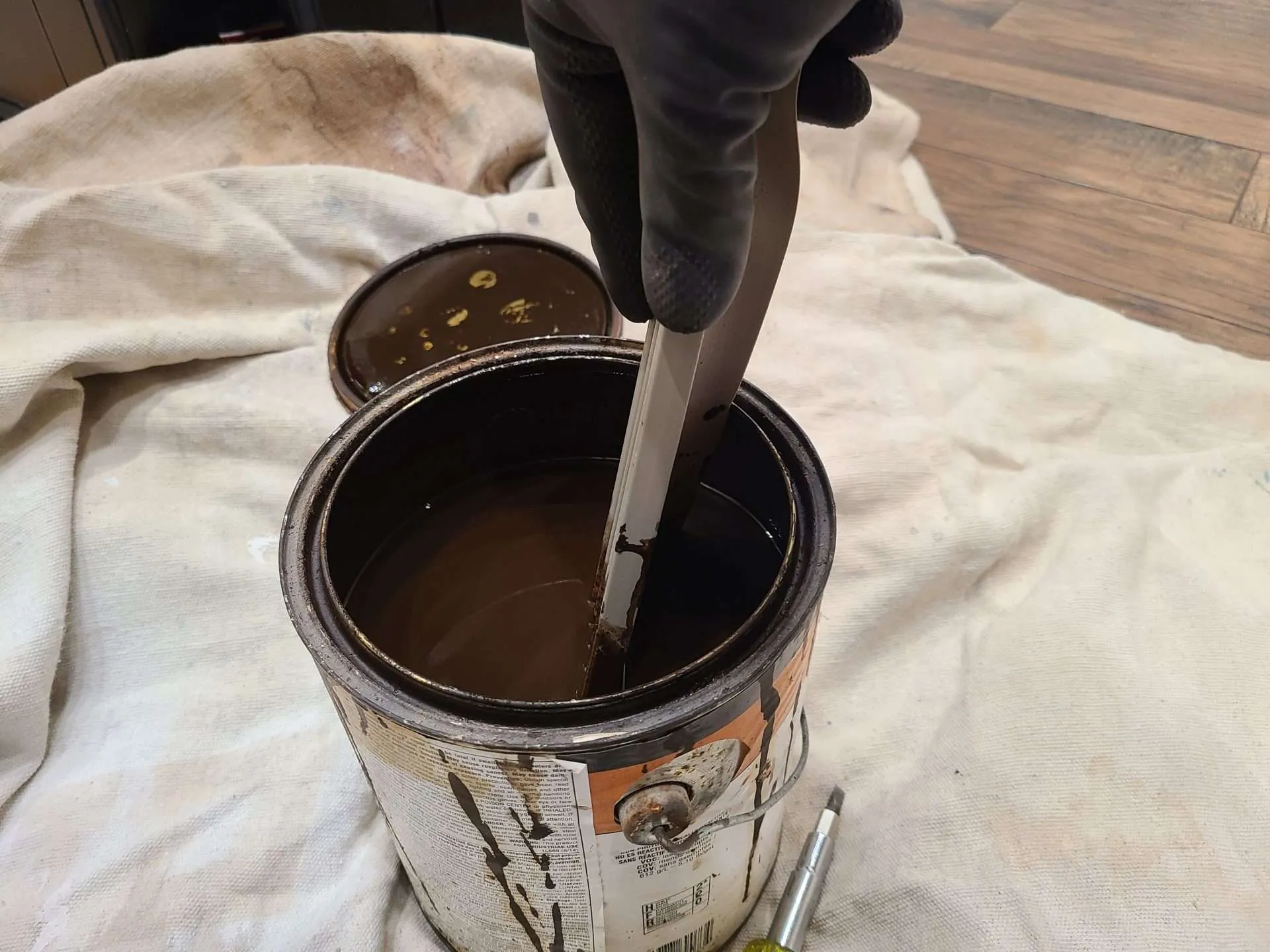
Stain separates when it sits. Before you do anything, give it a solid stir so the pigments are evenly mixed. This makes sure the color you apply is consistent from the start.
Stain is really messy so make sure to use a drop cloth or something absorbent under the can to catch any drips!
Step 2: Apply the Stain
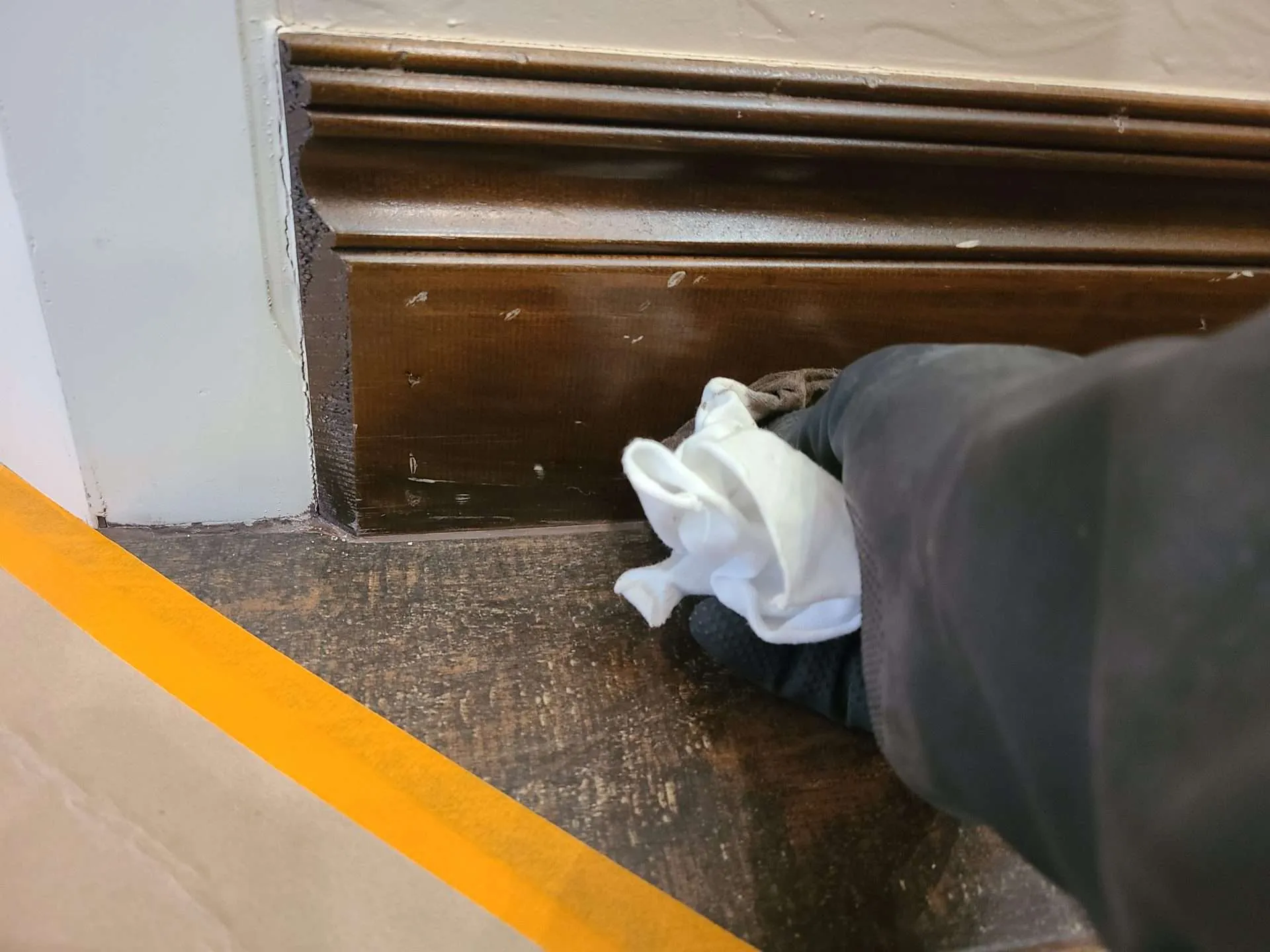
Take a rag and dip it into the stain. Then wipe it directly onto the nicked area. At this point it may look darker than you’d like, but that’s okay. Remember, you’ll be wiping off the extra.
You may need to rub the rag back and forth to get the stain down into the scratches is they are deep. You should notice the scratches visibly getting darker as you go over them.
Step 3: Wipe Away the Extra

After about 30 seconds, grab a clean rag and wipe the area down. The stain will stay in the scratches, blending them in with the rest of the finish. For deeper dings, I’ll sometimes go over it a second time to really even things out.
If you skip this step you will wind up with a blotchy or uneven look on the wood. You basically want to remove all the stain except what has gotten down into the scratches.
Step 4: Blend and Buff
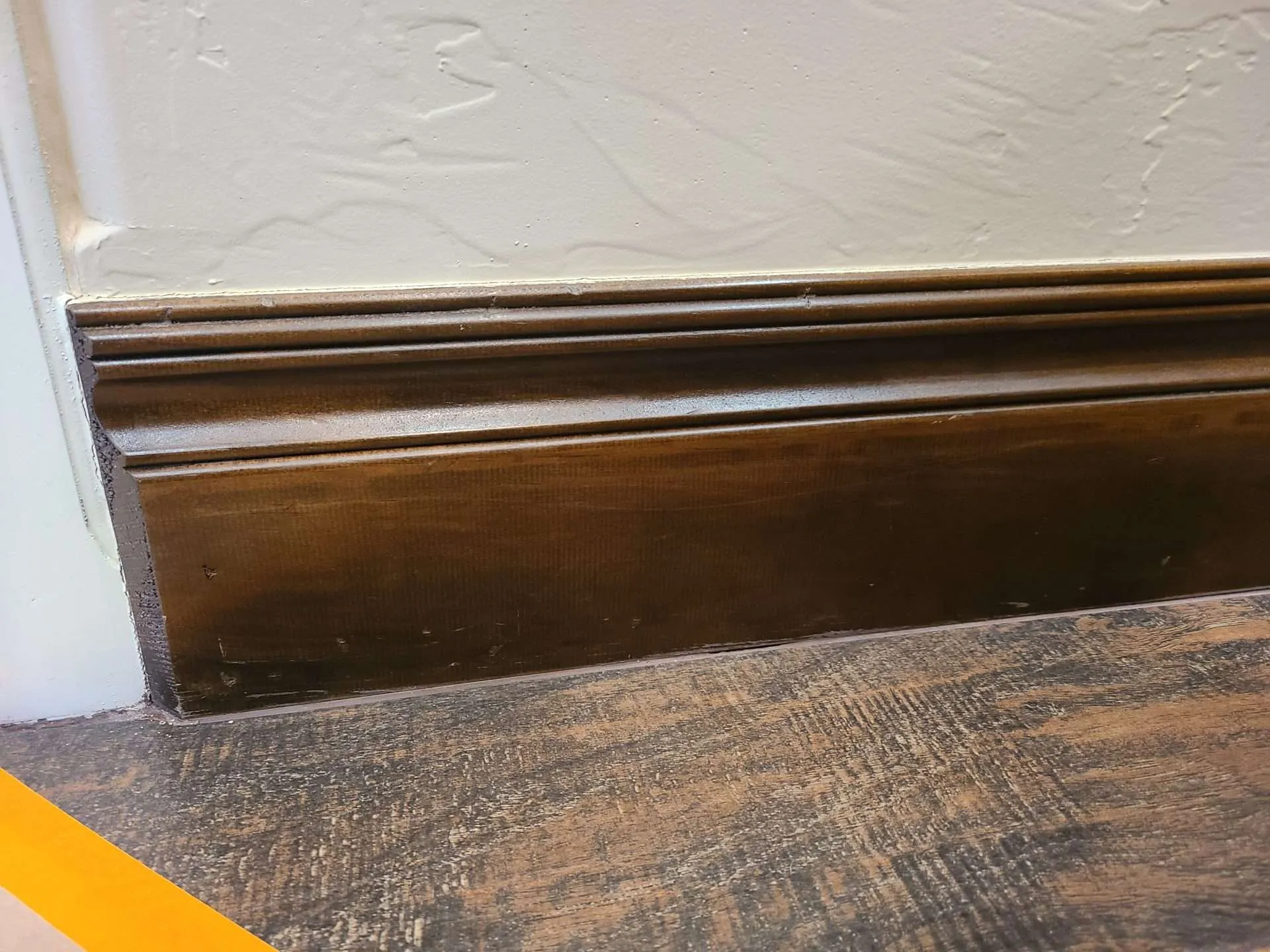
Use another dry cloth to buff the area. This helps the stain blend into the surrounding wood so the repair doesn’t stand out. Once it’s dry, you’ll hardly notice those nicks anymore.
A Few Extra Tips
-
Match your stain as closely as possible. If you’re unsure, start lighter. You can always darken it with a second coat.
-
Painter’s tape is your friend when working near walls or flooring.
-
Keep it simple. You’re just touching up, not refinishing the whole piece.
Why I Recommend Stain Over Touch-Up Markers
Over the years, I’ve seen people try every kind of touch-up pen and filler stick on the market. They work for a little while, but most of them fade or rub off. Stain, on the other hand, soaks into the wood and becomes part of the finish. It’s the most natural way to fix nicks in stained wood, and the results actually last.
Final Thoughts
Every home has its share of bumps and dings, but they don’t have to be permanent. With a can of stain and a rag, you can fix nicks in stained wood in just a few minutes and bring your trim or furniture back to life. Next time you see one of those little scars, don’t stress—just grab your stain and make it disappear.
