How to Fix Uneven Stain on Wood Fence
We’ve all been there—or maybe you’re staring at it in your own backyard right now. That wooden fence you once admired for its rich, even color is now looking… well, a little embarrassing. Some boards are darker, others lighter, and there are those telltale lines where one section of stain dried before the next could blend in. If this sounds familiar, you’re probably wondering how to fix uneven stain on wood fence and get it looking great again.
Let’s walk through what likely went wrong, how you can fix it, and what steps you can take to make sure your next staining project is smooth and professional-looking.
Why Is My Wood Fence Stained Unevenly?
Before we dive into solutions, let’s cover the basics of why fences end up with blotchy or streaky finishes. Uneven stain on a wood fence is almost always the result of application errors and environmental factors:
1. Uneven Application
If stain was rolled onto the fence in vertical strips without back-brushing or back-rolling, it likely sat unevenly on the wood’s surface. This can leave darker streaks where the stain was heavier and lighter areas where it absorbed too quickly or was spread too thin.
2. Lap Marks from Flash Drying
Lap marks happen when one section of stain is allowed to dry before the next section is applied, creating visible lines. This is especially common when staining in hot, sunny weather, where stain dries faster than you can blend it.
3. Failure to Maintain a Wet Edge
Keeping a wet edge means working in small, manageable sections and ensuring the edge of your application stays wet, so new stain can blend seamlessly. When you let the edge dry before overlapping, you get harsh lines.
4. No Back-Brushing or Back-Rolling
Back-brushing (or back-rolling) is essential to work the stain into the wood and ensure an even finish. Skipping this step can leave roller or brush marks and cause uneven penetration.
How to Fix Uneven Stain on Wood Fence
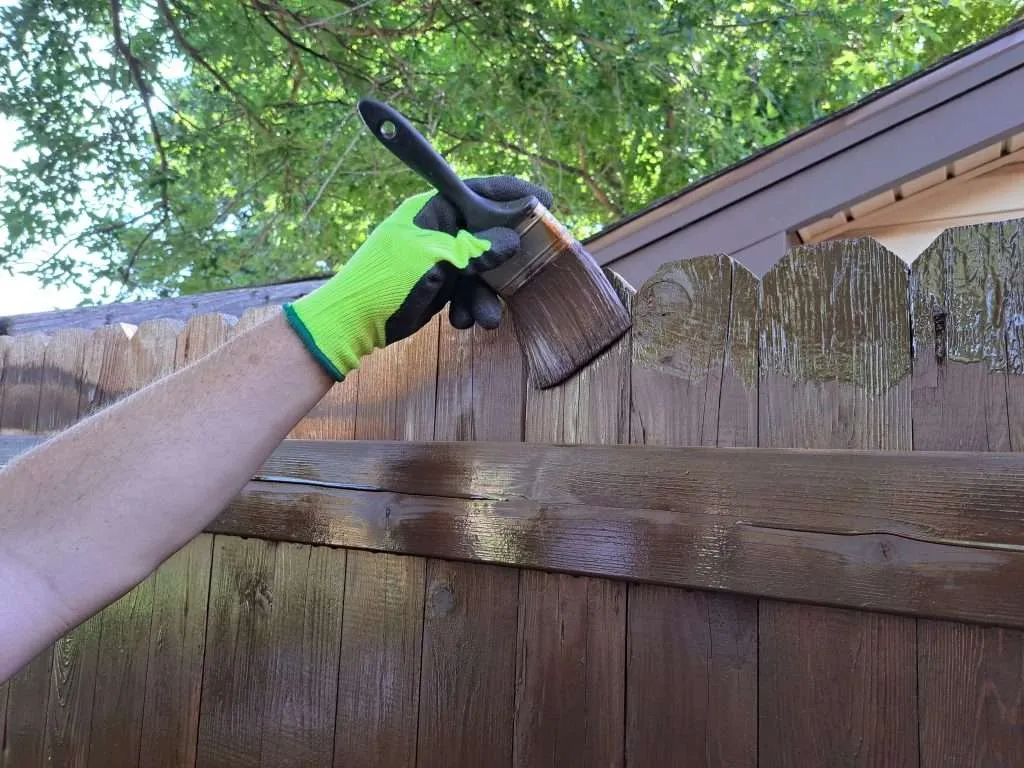
If your fence has uneven stain, don’t worry—you’re not stuck with it forever. Here’s how to correct it and bring your fence back to life.
1. Apply a More Opaque Stain
If the unevenness is significant, the best option is to apply a more opaque stain—like a semi-solid or solid stain—over the existing finish. These products provide greater coverage, effectively hiding the blotchy areas and creating a more uniform color. You’ll still retain some of the wood’s texture, but the color will look much more consistent.
2. Restain Using Proper Technique
If the unevenness isn’t too severe and you’re up for the challenge, you can try applying another coat of the same stain using the right approach:
Work in small sections to maintain a wet edge.
Use a roller or sprayer for speed, but always follow with a back-brush or back-roll to even out the finish.
Blend edges carefully to avoid lap marks. While this might not completely fix the unevenness, it can improve the overall appearance.
3. Live with It (For Now)
If the stain job isn’t awful but just has a few rough patches, you might choose to live with it until the next full maintenance cycle. Weather and sun exposure will naturally wear the stain over time, and you can plan to apply a more even coat in a few years.
Key Staining Techniques to Prevent Uneven Finish
-
To avoid running into this issue again, follow these key staining best practices. Here’s your friendly neighborhood checklist for a professional-looking wood fence:
-
Check the Weather: Stain when temperatures are mild (ideally between 50°F and 80°F), with no direct sunlight or high winds.
-
Keep a Wet Edge: Always work in small, manageable sections and blend edges to prevent lap marks.
-
Use High-Quality Tools: Use a combination of roller and brush (or sprayer and back-brush) to ensure even coverage and penetration.
-
Back-Brush or Back-Roll: This is essential to push the stain into the wood grain and eliminate streaks.
-
Choose a Premium Stain: High-quality stains with good leveling properties help prevent uneven absorption and flash drying.
-
Don’t Rush: Take your time and avoid tackling too large an area at once. Rushing is one of the biggest culprits behind uneven finishes.
Final Thoughts
Uneven stain on a wood fence isn’t the end of the world, but it’s definitely frustrating—especially if you put in a lot of time or money expecting a beautiful finish. The good news is that with the right techniques and a little patience, you can either improve the current look or start fresh with a more opaque stain that covers the blotchiness.
Next time, remember: stain in the right weather, use the proper tools, and take your time. Keeping a wet edge and back-brushing will save you a world of frustration—and make your fence look like it was done by a pro.
For more tips on wood staining techniques, troubleshooting, and product recommendations, explore more articles here on AllAboutWoodStain.com. Your perfect fence finish is just a brush (and a little know-how) away.
